Is your parent forgetting medications or skipping meals? Before a crisis forces the decision, here’s how to recognize when it’s time to reach out.
By J.A.P. Senior Care Services Birmingham, Alabama 8 min read
Most families don’t start thinking about home care after a calm, unhurried conversation. They start thinking about it after a fall. A missed appointment. A phone call that didn’t sound quite right. By the time a crisis forces the decision, the options feel narrower and the stress is higher.
You don’t have to wait for that moment. Knowing what to watch for, and knowing that getting support is an act of love and not surrender, makes all the difference. Here are five signs that your aging parent may benefit from professional home care, and what you can do right now.
Sign 01

Medications Are Being Forgotten, Skipped, or Mismanaged.
Medication errors are one of the leading causes of hospitalization among older adults. A pill skipped here or a double dose taken there can quickly become a serious health event, especially for seniors managing chronic conditions like diabetes, heart disease, or high blood pressure.
It’s easy to miss. Many seniors don’t want to seem like they’re struggling, so they don’t mention the confusion. And it’s not always obvious from a distance.
What to Watch For
- Pill bottles that haven’t moved, or are clearly being taken inconsistently
- Confusion about which medications to take and when
- Expired prescriptions that haven’t been refilled
- Your parent saying they “feel fine” but reporting symptoms that suggest otherwise
A trained J.A.P. caregiver doesn’t administer medications, but they do provide structured reminders, help organize pill organizers, and alert the care team when something doesn’t look right. Our RN-led model means clinical oversight is always part of the picture.
Sign 02

Meals Are Being Skipped, Simplified, or Forgotten.
When you walk into your parent’s kitchen and the refrigerator is nearly empty or stocked with food that has gone bad. That is a signal worth paying attention to. Nutrition is foundational to cognitive health, energy levels, and immune function in older adults. A senior who isn’t eating well is a senior whose overall health is declining, often quietly.
Skipped meals aren’t always about forgetting. Sometimes preparing food has simply become physically difficult. Sometimes loneliness makes eating alone feel purposeless. Either way, it matters.
What to Watch For
- Noticeable weight loss without an intentional reason
- A refrigerator full of expired or untouched food
- Your parent eating the same simple thing every day (crackers, toast) because cooking has become overwhelming
- Decreased energy or more frequent weakness or dizziness
Meal preparation is one of the most meaningful services a caregiver provides, not just nutritionally but socially. Having someone sit across the table makes the meal matter again.
“
We didn’t build J.A.P. to be the biggest agency in Alabama. We built it so every senior in Jefferson and Shelby County could feel what our grandmother Ethel gave us: love, dignity, and respect.
— Yarlardo Henderson, RN · Founder, J.A.P. Senior Care Services
Sign 03
The Home Is Becoming Unsafe or Unkept.
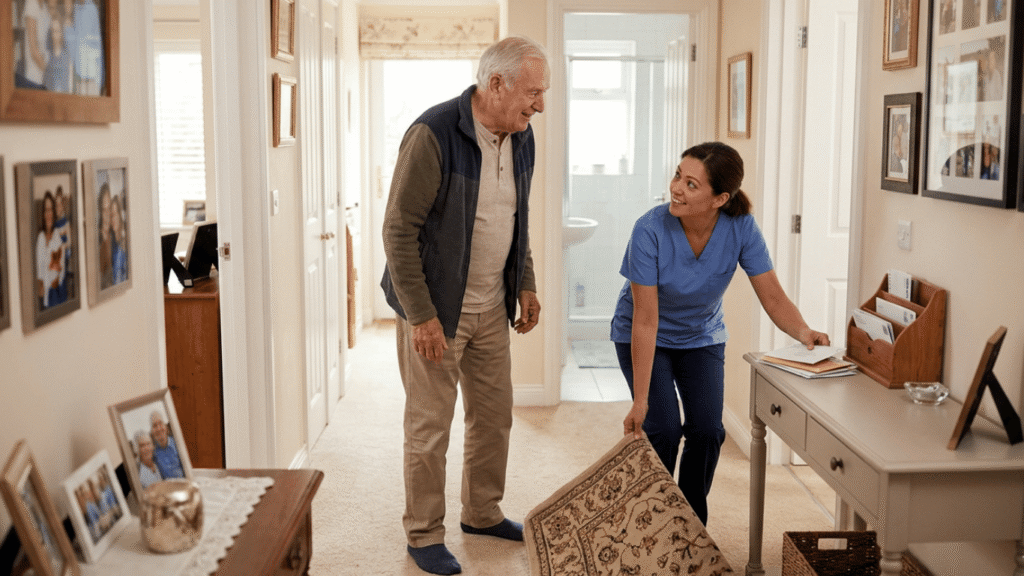
This one can be hard to see, and even harder to bring up. The home your parent has lived in for decades may have once felt familiar and safe. But physical changes like reduced balance, limited mobility, or declining vision can turn ordinary spaces into hazards.
A pile of mail on the floor. A bathroom without grab bars. A hallway with a loose rug. These aren’t signs of failure. They’re signs that daily life is getting harder to manage alone.
What to Watch For
- Visible clutter that has accumulated over time, especially in walkways
- Evidence of a fall, even one they didn’t tell you about (bruises, furniture rearranged)
- Dishes piling up, laundry not being done, or general hygiene around the house declining
- Bathrooms that feel slippery or unsafe
Light housekeeping, fall risk awareness, and home safety support are core parts of what our caregivers provide. When the home is safer and more organized, your loved one feels more in control, and that independence matters deeply to them.
Sign 04
Isolation Is Increasing and Connection Is Fading.
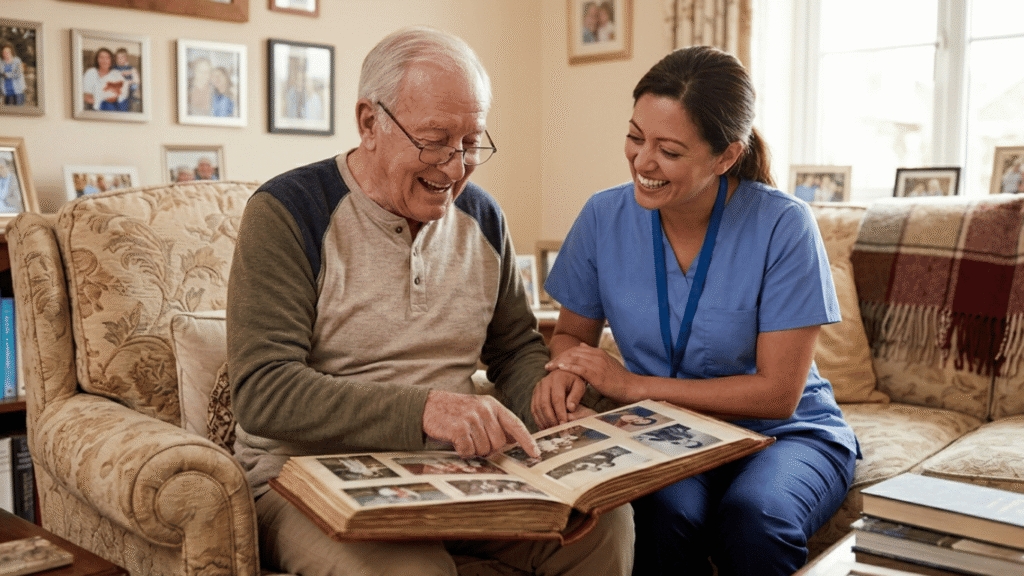
Loneliness in older adults is more than a quality-of-life concern. Research consistently links social isolation to higher rates of depression, cognitive decline, weakened immune function, and earlier mortality. The American Medical Association has described senior loneliness as a public health crisis.
When your parent stops calling as often, declines invitations, no longer mentions friends or neighbors, or seems to have lost interest in things that once brought them joy. That withdrawal is worth taking seriously.
What to Watch For
- Significantly fewer calls, visits, or social engagements than before
- Loss of interest in hobbies, television, reading, or things they used to enjoy
- Signs of depression: low mood, tearfulness, flat affect, or expressions of hopelessness
- Comments like “I don’t have anyone to talk to” or “It doesn’t matter anymore”
Companion care is not a secondary service. It is healthcare. A consistent, warm presence several times a week can reduce depression, improve cognitive engagement, and give your parent something to look forward to.
Sign 05
Personal Hygiene or Daily Self-Care Is Declining.
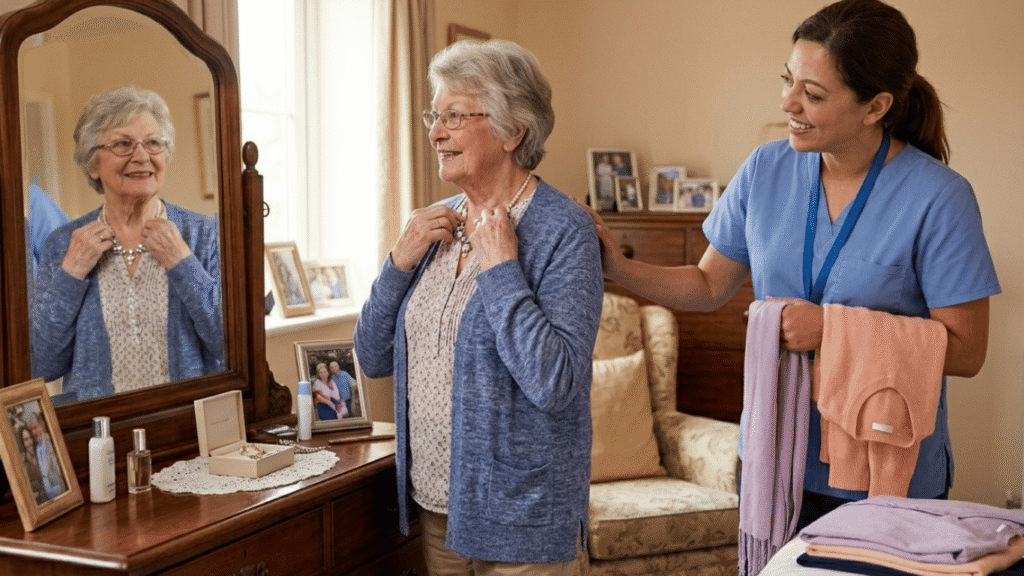
This is often the last sign families notice, and one of the most telling. When bathing, grooming, or dressing becomes physically difficult or mentally overwhelming, many seniors will quietly stop doing it rather than ask for help. Pride is a powerful thing, especially for a generation that values self-reliance.
This isn’t about judgment. It’s about recognizing that the daily tasks most of us take for granted, like showering, getting dressed, and oral hygiene, require real physical strength and cognitive effort that may be genuinely harder than it looks.
What to Watch For
- Wearing the same clothes for multiple days without changing
- Body odor, unkempt hair, or dental hygiene issues that are new
- Your parent mentioning that showering feels difficult, painful, or scary (fear of falling)
- Skin irritation or sores suggesting inadequate care of sensitive areas
Our caregivers provide compassionate personal care assistance including bathing support, grooming help, and dressing assistance, always delivered with the dignity and respect your loved one deserves. It’s one of the most human things we do.
Quick Reference
The 5 Signs at a Glance.
- Medication mismanagement:missed doses, confusion, or expired prescriptions going unfilled
- Skipped or simplified meals:weight loss, empty fridge, or loss of interest in eating
- Unsafe or unkept home:fall hazards, clutter in walkways, or household tasks left undone
- Social isolation and withdrawal:fewer calls, lost interest in hobbies, signs of depression
- Declining personal hygiene:repeated clothing, poor grooming, or fear of bathing alone
What to Do Next
You Don’t Have to Figure This Out Alone.
If you recognized one or more of these signs in your parent, the most important thing to know is this: getting help is not giving up on them. It is choosing them. It is saying, “You deserve more than I can give you by myself.” That is one of the most loving things a family member can do.
At J.A.P. Senior Care Services, we begin with a conversation. Our founder Yarlardo Henderson, RN, built this agency with a nurse’s clinical eye and a granddaughter’s heart.
When you call us, a real person picks up.
When we build a care plan, an RN reviews it.
When a caregiver walks through your parent’s door, they’ve been carefully vetted and personally matched to your family.
We serve families across Jefferson and Shelby County, Alabama. We would be honored to serve yours.
J.A.P. Senior Care Services · Birmingham, AL
Ready to Start the Conversation?
Our RN-led team will listen, answer every question, and help you understand what support looks like, at no cost and with no pressure. There’s a real person on the other end of every call.
Request a Free Consultation → Visit Our Website
Available 24 hours a day, 7 days a week · (205) 253-6537